
Published: 4/30/26
As discussed in our article, Caring for Your Pet’s Coat, regular maintenance based on a dog’s coat type and lifestyle is important to a dog’s health. Since mats can develop so easily, let’s take a deeper dive into how they occur, how to prevent them, and how to address them.
Dogs with long or curly coats are more prone to mats, which can be uncomfortable and cause health issues if left unaddressed. There are some simple steps you can take to avoid them, but if one develops, it should be removed as soon as possible.
Understanding what mats are and how they develop can help prevent them. These tangled knots of hair afflict both dogs and cats. They pull on the skin, causing discomfort and pain, and restrict movement. They can damage the skin, become a breeding ground for parasites, fleas, ticks, as well as trap feces, putting the pet at risk for infection. In more severe cases, a mat can become pelted, preventing the coat from allowing air to the skin, leading to serious health issues and significantly restricting the pet’s movements. Each year, our Fear FreeTM certified Pampered Pets Inn Spa Team provides close to 5,000 baths, haircuts, and trims, providing us an excellent opportunity to see what works and what doesn’t. Below are our suggestions that you can try yourself or have us assist with.
Causes
A number of factors can increase the risk of mats:
- Rubbing. Mats tend to occur where there is frequent rubbing or movement, particularly around the legs, tail, chest, and neck. Matting can develop when loose hair is not brushed out and removed.
- Coat Type. Certain breeds are more prone to developing mats than others. Dogs with fine, curly, or double coats incur mats more frequently than other breeds.
- Lifestyle. Dogs with longer coats and active, outdoor lifestyles are at greater risk for mats because debris can get caught in fur. Moisture from swimming or rain can cause hair to curl and then dry, wrapping around itself. This also explains why matting can occur after a bath if the coat is not dried and brushed thoroughly.
- Seasonal Variations. Matting happens more frequently during shedding seasons, and both drier climates and the winter season can make mats worse.
Prevention
- Regular Brushing. Brushing is one of the most crucial aspects of keeping your dog’s coat healthy. Mats that aren’t too big or tight and caught early may be brushed out gently using a slicker brush, which has fine, tightly spaced wire bristles to reach the undercoat and remove loose hair or tangles. We like to follow this with a metal comb, which has widely spaced teeth to check for remaining tangles and ensure the coat is smooth down to the skin. Keep in mind that brushing just the top layer of hair will cause the hair to knot underneath. A detangler or leave-in conditioner can be used to make brushing easier. Dogs susceptible to mats would benefit from adding our Maintenance Brushing service during their lodging stay to keep a consistent routine, particularly given the pool and water play opportunities we have. Note: Do not brush in one spot for too long or you can cause brush-burn.
- Remove Collar/Harness When Not in Use. Friction from harnesses or collars can lead to skin irritation, hair loss, and matting.
- Keep Dry. Wet hair can contribute to matting, so towel drying after getting wet (rain or swimming) and then brushing will help prevent matting as well as hot spots, particularly during warmer months.
- Regular Haircuts.While the frequency of grooming may vary depending on the type of coat your pet has, it is generally recommended to have your pet professionally bathed every 4 to 6 weeks and groomed every 6 to 8 weeks. During the grooming session, the groomer will typically perform a thorough brushing, trimming, and clipping of the coat. Additionally, they will check for any skin or coat problems, such as hot spots or pelting, which can be treated promptly to avoid further issues. Note: Double-coated breeds or breed mixes should not be shaved unless recommended by your veterinarian, as their double coat keeps them cooler on hot days. With your groomer, discuss a style for your pet that everyone can be happy with. Hair length and maintenance are a trade-off.
- Sanitary Trims. For dogs who don’t need a full body haircut, sanitary trims can keep the hair on their backsides free of debris and mats.
- Diet is equally important for coat health, so keep your pet on a healthy diet.
- Add a Shed Control Treatment to a Full-Service Bath. Shedding is an essential part of your dog’s skin and fur health, ridding them of old or damaged hair. However, a build-up of excess old or damaged hair can lead to matting. Our Shed Control Treatment is designed to remove the excess hair, dander, and dirt in your dog’s coat. We start by blowing out the coat and loosening the dead hair underneath. Then, after they are bathed and conditioned with shed control products that help remove loose undercoat, we blow and brush the coat again, and add a leave-in conditioner, spending extra time to make sure we remove as much hair as possible. This method is less damaging to the skin and coat than brushing alone, and leads to a softer, healthier coat. Note: Do not bathe your pet to get rid of mats, as this may just make them worse.
Addressing Mats
When best intentions fail, and your dog does end up with matting, address them based on the severity.
- Loose. If the mat is loose, use a comb and hold the base of the mat. Start brushing the ends and slowly move your way up to the base of the mat to ensure that no extra tangles are added.
- Limited. Grooming clippers should be used to shave the area if the mat is more severe, as it will be less painful for your pet. Mats occur close to the skin, so avoid attempting to cut them out with scissors or a sharp object, as you could cut their skin instead, and create a negative association with grooming.
- Heavy. If a pet is heavily matted, do not bathe without first removing the mats with clippers. Shampoo cannot penetrate mats, so the bath would not be effective. In addition, the bath will likely make the mats worse and more uncomfortable for your pet.
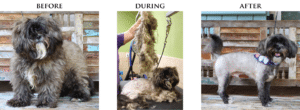
- Pelted. If the coat has become pelted, shaving down to the skin is the only option. At this point, the dog’s health is the highest priority. This is especially true in cases where circulation is being cut off in an ear or limb, or infection and sores have developed under the mat. The good news, though, is once the pelt is removed, you can start over with the coat. Keep it brushed and mat-free and you will have more options for coat length in the future.
Taking care of your dog’s coat requires some effort, but it is worth it to keep your pet healthy and happy. Regular brushing can help prevent mats and tangles, and consistent grooming appointments will help maintain a healthy coat. We know some pet parents love the bonding experience and accomplishment of tackling brushing and grooming at home, and encourage you to try. But if you need help or would prefer to treat your pet to a spa day, we’ll be happy to help. Talk to one of our knowledgeable team members about how to keep your pet looking their best with a bath, haircut, or other spa service.