
By Megan Staub, Pet Services Manager
Published 6/1/2026
When I was young, all I wanted to do was work with animals. I started on dairy farms, taking care of the calves. I doctored all my pets and brought home baby bunnies, birds, you name it. But it wasn’t until I began Vet Tech school and started working with animals in the shelter that my eyes were opened to what a stressed, fearful dog looks like. That’s when I became familiar with the importance of appeasement signals. When asked to describe obvious signs of distress, everyone likely pictures dogs shaking and cowering, with Sara McLachlan music playing in the background. But what about the signs that aren’t as easy to read? These are the signs our pets often try to communicate, but we don’t recognize them.
Recognizing Cues
The most common appeasement signals are:
- Lip Licking. If your dog is licking their lips when there’s no food around, it can be a sign they’re feeling uneasy or unsure.
- Yawning. Dogs don’t just yawn when they’re tired—frequent yawning in a stimulating or unfamiliar situation can indicate stress.
- Whale Eye. This is when you can see the whites of your dog’s eyes as they turn their head, but keep their gaze fixed. It often signals discomfort or anxiety.
- Turning Away or Avoiding Eye Contact. A dog that looks away, turns their head, or avoids interaction may be trying to de-escalate a situation.
- Stiff Body or Freezing. Sudden stillness can be a warning sign that your dog is overwhelmed and unsure how to respond.
- Panting (when not hot or exercised). Excessive panting can indicate stress, especially in calm environments.
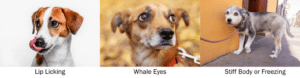
Recognizing these subtle cues and addressing them early can prevent fear-based reactions, elevated stress and anxiety, build trust between you and your dog, and help your dog feel safer. These signals can be displayed singularly or stacked. For example, your dog may yawn when the trash truck comes by because the loud noise scares them, or they may lick their lips, yawn, and start to pant in succession. These signals are quick and difficult to pick up on. When home or out and about, monitor your dog for these signals and take note of what may cause stress, so you can manage the triggers to prevent fear, stress, and anxiety.
Managing Triggers
When we respond to early stress signals by creating space, removing a trigger, or offering reassurance, we’re showing our dogs that they don’t need to “shout” to be heard. If you notice your dog showing stress signals:
- Give them space and avoid forcing interaction
- Remove or reduce the trigger if possible
- Stay calm (your dog will take cues from you)
- Reward calm behavior to build positive associations
At Pampered Pets Inn, we use a number of techniques to help reduce anxiety, including:
- Pheromone blankets
- Calming chews
- A considerate approach and Fear FreeTM handling techniques, such as working at the dog’s pace and lick mats during spa services
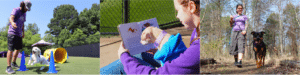
- Providing enrichment options, such as Extra Play, Extra Love, and Trail Walks, that relieve stress by releasing endorphins
Understanding your dog’s body language is one of the most powerful tools you have as a pet owner. By learning to recognize and respect these early signals, you’re not just preventing problems—you’re strengthening your relationship and helping your dog feel safe, understood, and supported. If you have questions or would like to discuss challenges, let our concierges know, and I’ll be happy to assist.
Megan Staub is the Pet Services Manager for Pampered Pets Inn. She has earned an AS in Animal Sciences from Gaston College and is a Registered Veterinary Technician (RVT). Her extensive experience in pet behavior and dog training, as well as certifications in both dog training (CPDT-KA) and Fear FreeTM animal handling techniques, allow her to understand and provide our guests with the best care possible.